
Logan County Name-Based Case Searches
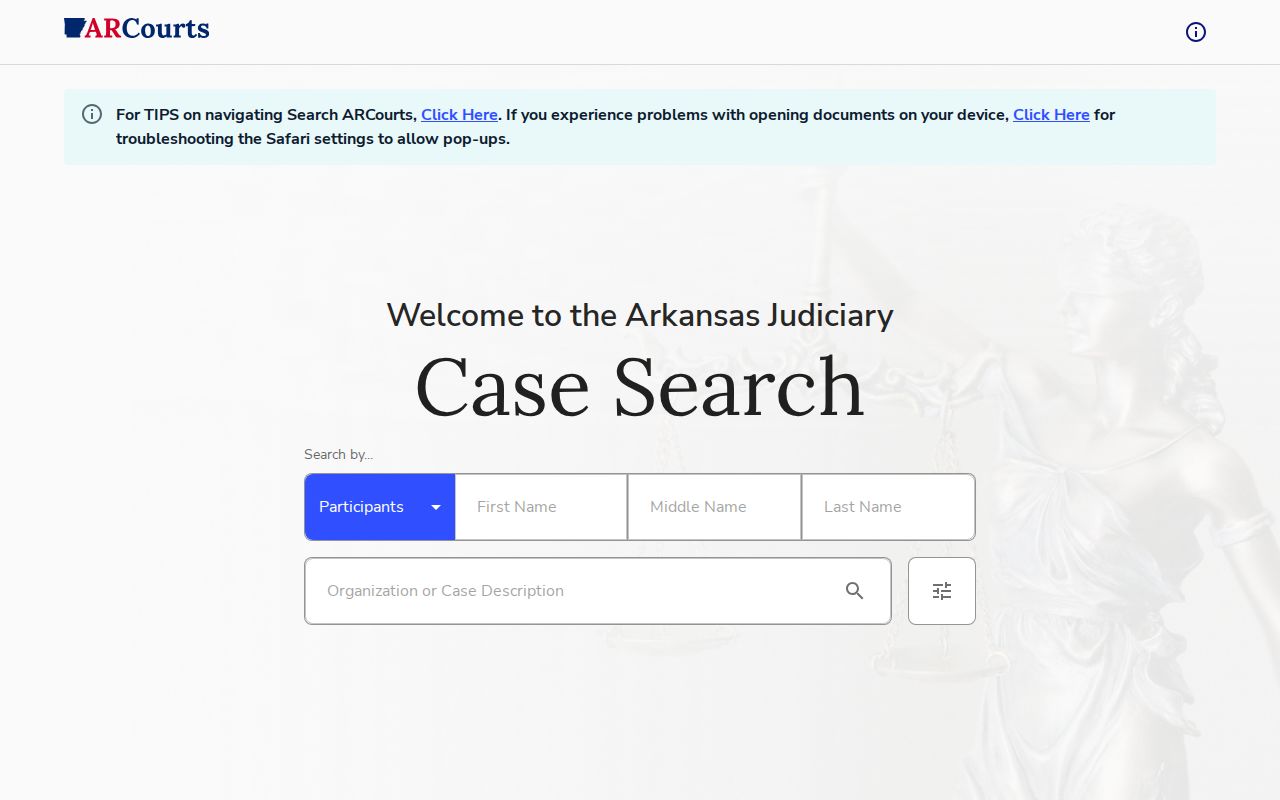
Search ARCourts offers two modes. For a person or organization, pick Participants and enter enough of the recorded name to separate the right match from the rest. Use Detail to add Logan County, a date range, case type, or location when that helps. Spelling must match the record. Aliases may appear, so check them too.
- Open Search ARCourts and choose Participants.
- Enter the last name and then the first or middle name when known; use the organization method for a business or agency.
- Expand Detail, select Logan County, and avoid a Paris or Booneville filter until the venue is known.
- Compare the case style, filing date, court location, type, and status before opening the result.
- Read the chronological events and newest setting, then confirm critical information with the proper clerk.
The captured field inventory is broader than a simple name box:
| Field Label | Type | Required | Notes |
|---|---|---|---|
| Search by | Selector | One mode | Cases or Participants |
| First/Middle/Last Name | Text | Alternative | Participant search; aliases are included |
| Organization or Case Description | Text | Alternative | Exact recorded organization wording matters |
| County Name | Selector | No | Select Logan |
| Court Location | Selector | No | Narrow only when Paris or Booneville is known |
| Start Date / End Date | Dates | No | Limits the filing or search range |
Search ARCourts Modes for Logan County
Cases mode takes a case number or citation number. Detail opens further filters there. Participants mode instead looks up a person or organization tied to a case. The mix-up is common. A name typed into the case-number route, or a citation treated as a participant, wastes a search. The Search ARCourts root is the current public starting point for both.
No registration is needed. The interface serves statewide public case information. Document links and District Court coverage vary by case and by participating court. For Logan County Circuit Court, Search ARCourts mirrors the statewide case-management environment. Participating lower courts may offer fuller records. Even so, a missing District Court traffic, misdemeanor, civil, or small-claims result is not proof the department holds no file.
Logan County Case Number Searches
A full case number is the best search key. It avoids mix-ups among people with similar names. Choose Cases and enter the number exactly as it appears on a notice, pleading, receipt, or prior docket entry. Check the court and location too. A wrong venue defeats the whole lookup.
Logan County has no single universal circuit format that a searcher could safely invent. Two local warrant prefixes are in use: SW marks a search-warrant docket and AW marks an arrest-warrant docket. Such District Court warrant records can exist before a formal criminal file opens. If a later criminal case is created, the warrant information transfers into it. Use the identifier printed on the source document.
Citation Number is a separate field in Cases mode. When the number fails, drop any date or location filters and verify every character. Then try a participant search or the District Court clerk.
Logan County’s Exact-Match Search Quirk
Arkansas AOC guidance describes an odd name rule. Type one or two characters in a name field and the system runs an exact-name search. Three or more characters can return exact or partial matches. A two-letter fragment is no wildcard. It can be narrower than a longer entry.
For a stubborn organization, AOC suggests one or two distinctive words in the Last Name field. Try the official business name first. Then try a distinctive word, keeping Logan County selected. Avoid stacking a tight date range and Court Location filter on the first attempt.
The official Search ARCourts navigation tips explain participant search and result controls.
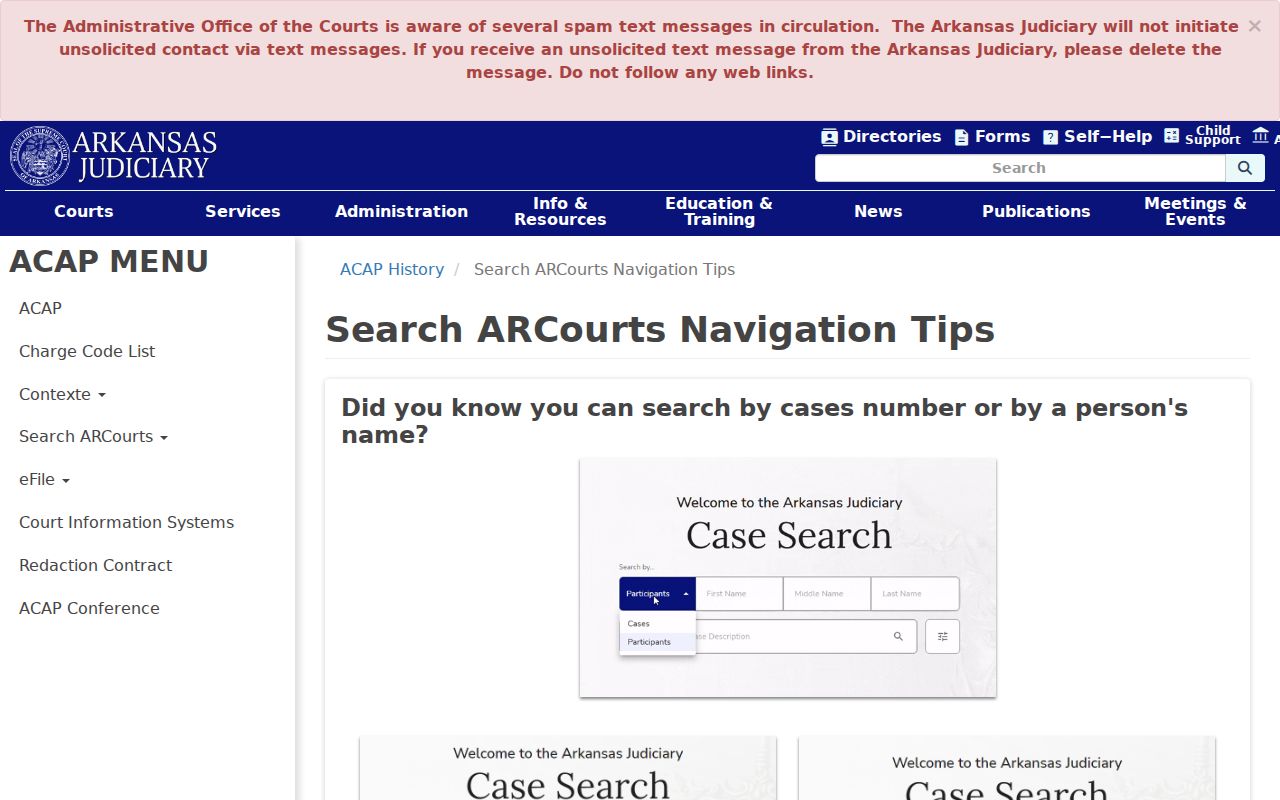
Retry more broadly first. One more pass costs little. A short exact-name query can hide what a well-chosen three-character or longer entry reveals, so the tips support trying again before deciding Logan County has no public result.
Case Search Results Explained
A search result is a public case summary. It is also an event register. What appears depends on the court's participation, the case, and access restrictions, and may run from identifying fields, parties, and attorneys to claims or charges, settings, outcomes, and document links.
| Case Number | The unique court identifier and the safest key for a return search. |
|---|---|
| Court / Location | The court level and venue, including a Paris or Booneville connection when recorded. |
| Case Style / Parties | The caption and public participants tied to the matter. |
| Case Type / Description | The category or description used by the court. |
| Filed Date | The date the clerk opened or accepted the case. |
| Status / Disposition | The recorded posture or outcome, which must be read with later events. |
| Events and Hearings | Chronological filings, orders, court dates, and other public activity. |
| Documents | Links where available; a listed event may have no public image. |
A one-line status rarely settles a procedural question. Read the newest events in order. Separate an order from a motion, and confirm the latest hearing through the Logan County court schedule process when a court date matters.
Sort Logan County Results Before Narrowing
Search ARCourts sorts results by the arrow in each heading. It filters them through criteria below the columns. The default view shows 25 rows. You can pick 50 or 100. Arrows move through more pages. These controls earn their keep when a common name floods the list.
Start by comparing county, location, case style, filing date, and type. Sort before adding constraints. A case can vanish if the date window is off. So can one where Paris or Booneville was picked on a guess. Once the right case opens, follow the chronological events rather than a one-line status.
The Search ARCourts coverage page explains what the public service provides.
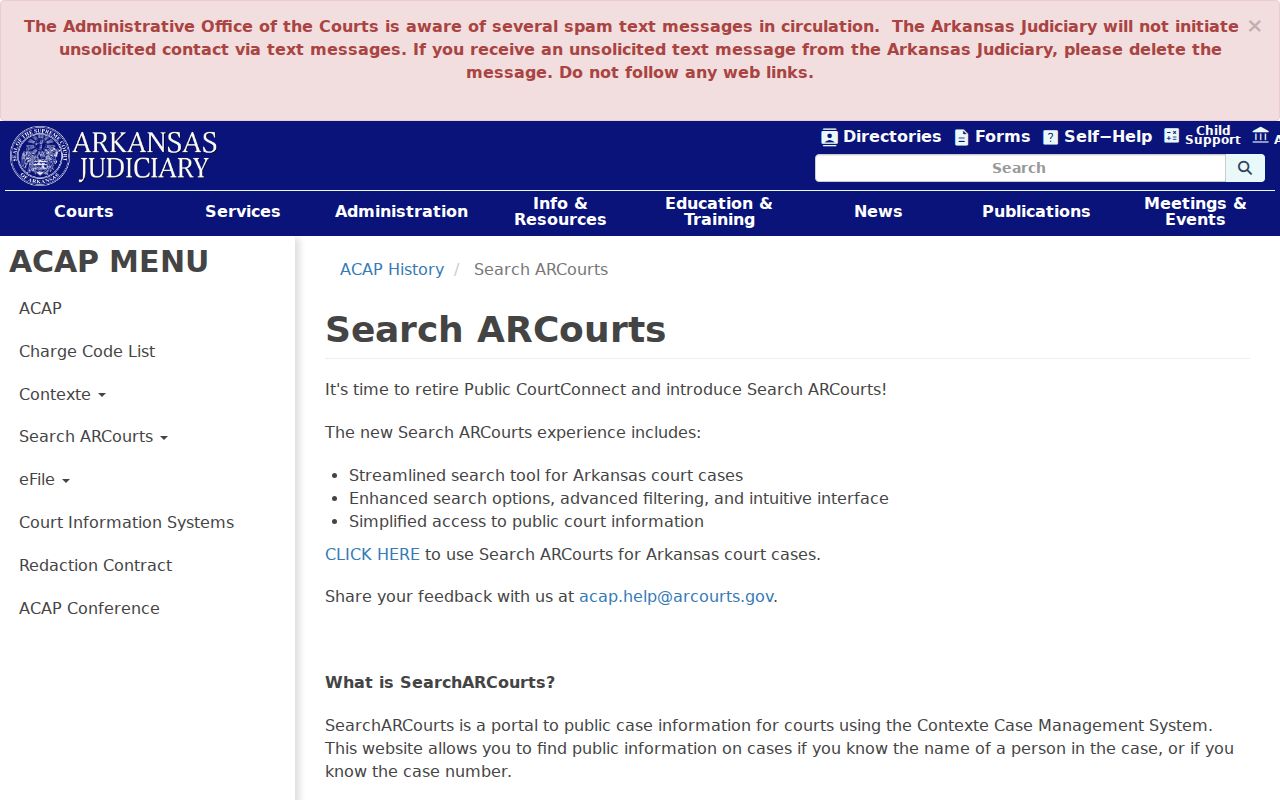
That coverage guidance explains the gap. When the public layer lacks the expected lower-court or document detail, the local clerk stays essential.
Two Ways to Search: County and State
Logan County has no rival county database. Search ARCourts stands alone online. The real choice is statewide portal versus local channels: the Circuit Clerk, District Court clerks, and public kiosks, each filling a different need.
| Search ARCourts | Logan County Clerk or Kiosk |
|---|---|
| Statewide public starting point | Local fallback for the court that holds the file |
| Search by case, citation, or participant fields | Identify the case using its number, party, and court details |
| Public summary, events, and some document links | Inspection, local clarification, copies, or certification where allowed |
| Coverage varies for participating district courts | Relevant department retains its own lower-court records |
| Useful before the venue is known | Best once Paris, Booneville, or Magazine and court level are known |
Walk-in kiosk access is free at two Logan County courthouses: 25 West Walnut Street in Paris and 366 North Broadway Avenue in Booneville. Each terminal opens Circuit Court categories for the public, covering civil, domestic relations, criminal, juvenile, and probate as access permits. One thing a kiosk will not do is produce a certified copy. The screen shows the docket entry, nothing more.
CourtConnect Retired for Logan County Searches
CourtConnect is gone. The state replaced that public lookup tool with Search ARCourts in January 2024. Any Logan County docket search now runs through the newer system. Old bookmarks and printed instructions pointing at CourtConnect lead nowhere. Arkansas Judiciary eFlex is a separate thing entirely. It is the filing system attorneys and parties use for electronic submissions. The CourtConnect retirement help page from the Arkansas Judiciary documents the transition. It also lists AOC support.
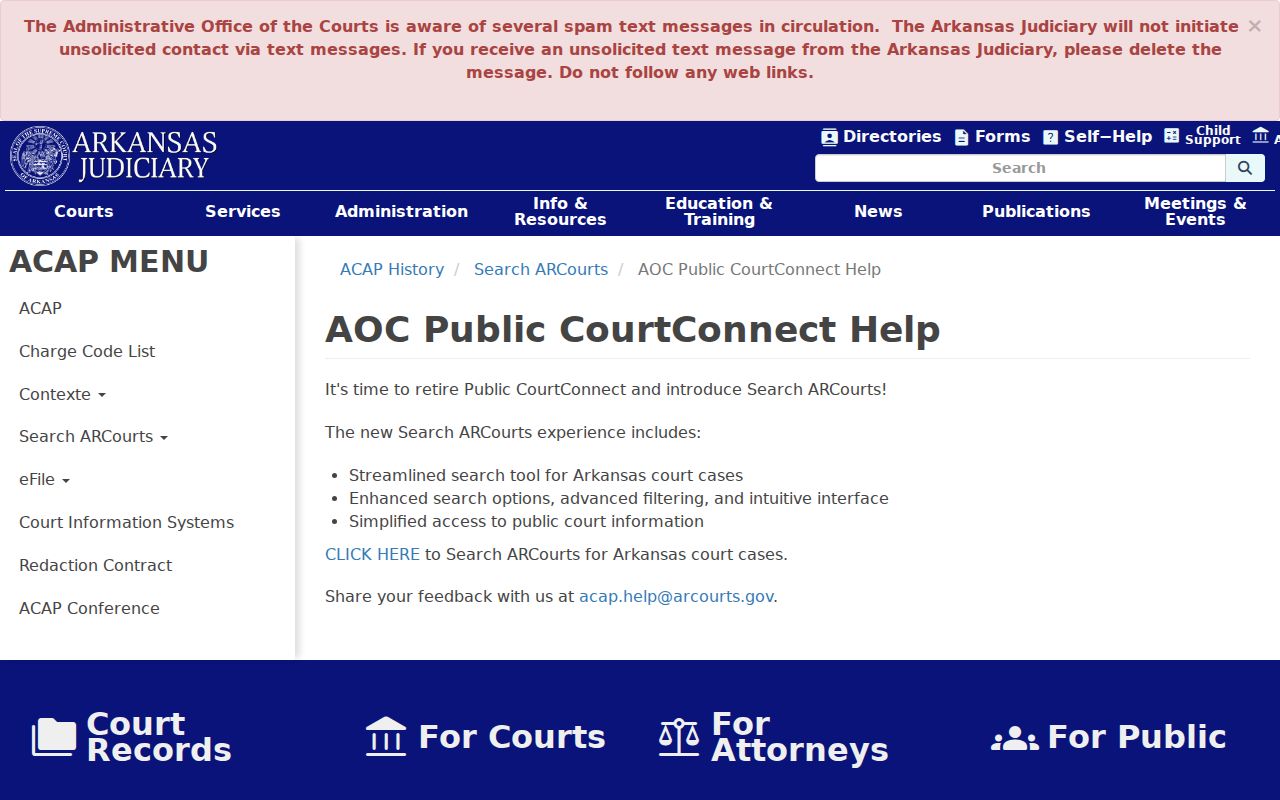
Here is why the switch matters for a Logan County case lookup. A dead legacy bookmark does not mean the case vanished. It just means the old path retired. AOC case-information support sits at 501-410-1900, option 3, and electronic-filing questions go to option 1. The state support line handles the system itself. The Logan County clerk remains the authority over the local official file.
When a Logan County Search Comes Up Empty
An empty result is not proof that a Logan County case is sealed or missing. Try again with the Court Location and date filters removed. Check the spelling and the case number. Toggle between Cases and Participants, and search Logan County broadly. Gaps often trace to older files, incomplete District Court participation, a different venue, or a filter mismatch rather than to the docket itself.
- Retry with the complete case number and no extra restrictions.
- Run a participant search with enough name characters and Logan County selected.
- Check both court level and venue, especially where Paris and Booneville could be confused.
- Use a public courthouse kiosk for eligible Circuit Court information.
- Call the Circuit Clerk or the correct Booneville, Paris, or Magazine District Court clerk.
When you call, bring details. Give the clerk the case number if you have it, the party name, the rough filing period, the type of matter, and the location shown on any notice. That keeps your docket request from landing on the wrong office.
Which Logan County Cases Stay Restricted
Arkansas Supreme Court Administrative Order 19 presumes public access. But it carves out anything made confidential by law, rule, or court order. So a Search ARCourts result may skip a restricted matter. It may hide a protected field, show an event without its image, or display a redacted filing. Juvenile records follow separate confidentiality rules. Sealed or protected family matters never appear as ordinary public search results. Redaction and sealing are not the same thing. Redaction masks protected identifiers inside a filing that stays public. Sealing locks down the case or record under legal authority. A clerk cannot hand over restricted material just because someone asks. Access to a restricted file runs through the governing statute, rule, or case order.
Public summary versus official file: Search ARCourts is public case information, while the Logan County clerk maintains the original court record and issues certified copies.
Public dockets serve real purposes. Use them to follow your own proceeding, confirm a hearing, understand the filings, or study how the court handles its calendar. Any fact that truly matters should be verified with the court or clerk that keeps the original record.